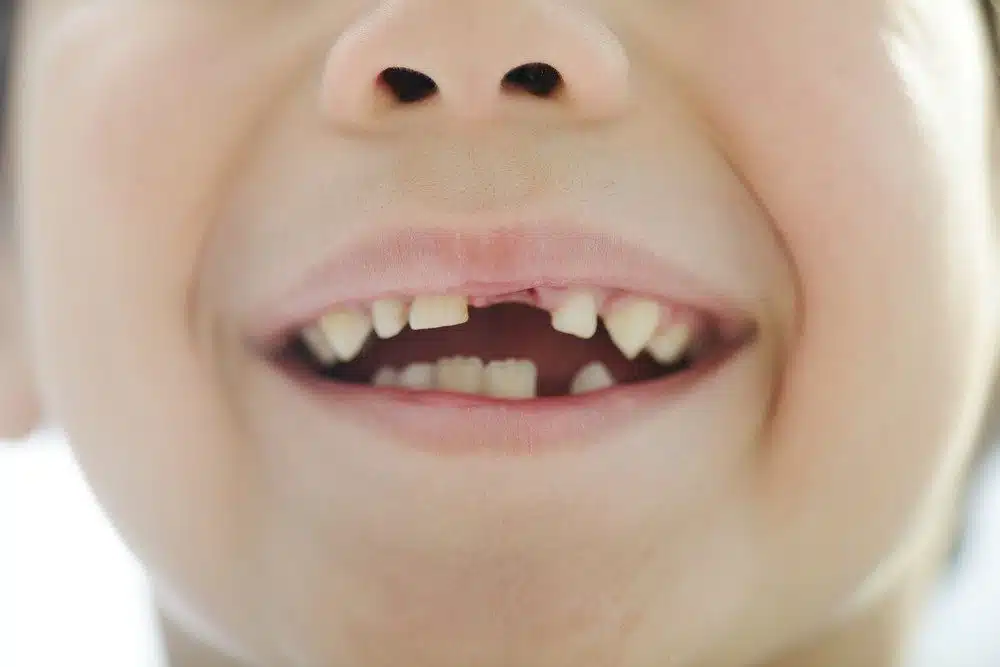
When a child loses a baby tooth prematurely due to extensive decay, an abscess, or dental trauma, parents often assume no treatment is needed because “an adult tooth will grow in anyway.” However, primary teeth serve a critical biological function beyond chewing: they act as natural space placeholders and eruption guides for permanent teeth. When a baby molar is lost months or years before its normal exfoliation time, adjacent teeth quickly drift and tilt into the gap. In pediatric dentistry, a space maintainer is the definitive clinical tool used to prevent severe crowding, impactions, and extensive future orthodontic interventions.
At Jacaranda Smiles, our dual-specialty pediatric dental and orthodontic team provides custom space maintenance solutions across Plantation, Pembroke Pines, and Margate. Here is an authoritative guide explaining how space maintainers work, the different types available, and why preserving arch integrity is essential for your child’s developing bite.
The Biomechanics of Premature Tooth Loss: Why Teeth Drift
Teeth do not remain static in alveolar bone; they naturally experience continuous eruptive pressure and forward movement known as mesial drift. When a primary molar is intact, it holds the dental arch perimeter open:
- Arch Collapse & Space Loss: When a primary molar is extracted prematurely, the molar behind it tips, rolls, and slides forward into the open space. Concurrently, teeth in front of the space may drift backward (distal migration).
- Permanent Tooth Impaction: The adult premolar developing inside the jawbone beneath the missing tooth loses its natural eruption pathway. With no space left in the arch, the permanent tooth can become completely blocked (impacted), deflect sideways into bone, or erupt ectopic through the gums.
- Midline Asymmetry & Opposing Supra-Eruption: Losing a primary tooth on only one side can cause the entire dental midline to shift toward the extraction site. Additionally, the opposing tooth in the opposite arch may over-erupt (supra-eruption) into the open space because it lacks an opposing biting contact.
The Main Types of Pediatric Space Maintainers
Depending on whether the missing tooth is in the upper or lower jaw, how many teeth were lost, and the child’s age, our specialists design one of several custom appliances:
1. Unilateral Fixed Maintainers (Single-Side Appliances)
- Band-and-Loop: The most common fixed maintainer. A custom stainless steel orthodontic band is cemented around the permanent or primary tooth adjacent to the empty space, with a contoured wire loop extending across the gap to touch the tooth on the other side. This prevents the posterior tooth from drifting forward until the adult tooth emerges.
- Crown-and-Loop: Similar to a band-and-loop, but utilized when the anchor tooth has substantial decay and requires a pediatric stainless steel crown rather than a simple band.
- Distal Shoe: A specialized appliance used when a second baby molar is lost before the permanent six-year molar has erupted. A stainless steel extension extends subgingivally to guide the unerupted adult molar into proper position.
2. Bilateral Fixed Maintainers (Both Sides of the Arch)
- Lower Lingual Holding Arch (LLHA): Used when multiple primary teeth are missing in the lower arch. Bands are cemented to the lower first permanent molars, connected by a custom wire resting passively along the inside (lingual) surfaces of the lower front incisors. This locks the molars back and preserves full lower arch perimeter.
- Nance Appliance / Transpalatal Arch (TPA): Used in the upper jaw. The Nance appliance connects bands on the upper permanent molars with an acrylic button resting comfortably against the hard palate, preventing upper molars from rotating or tipping forward.
3. Removable Space Maintainers
Made from acrylic and wire (resembling a retainer or partial denture), these are sometimes utilized when multiple anterior (front) teeth are missing, primarily to assist with speech articulation and appearance. However, because fixed appliances eliminate the risk of loss, damage, or compliance failure, fixed options are preferred in almost all posterior cases.
Direct Comparison: Space Maintainer Types
| Appliance | Arch Location | Indication | Maintenance & Care |
|---|---|---|---|
| Band-and-Loop | Upper or Lower (Unilateral) | Loss of a single primary molar | Avoid sticky candies; brush around loop daily |
| Lower Lingual Holding Arch | Lower Arch (Bilateral) | Loss of multiple lower primary teeth | Clean along lingual wire; check band cement |
| Nance Appliance | Upper Arch (Bilateral) | Loss of multiple upper primary teeth | Water flosser under palatal acrylic button |
| Distal Shoe | Upper or Lower | Loss of primary 2nd molar before 6-yr molar erupts | Close radiographic monitoring of eruption depth |
How Space Maintainers Prevent Costly Orthodontic Complications
Investing in a space maintainer is one of the most cost-effective preventive measures in dentistry. Without a maintainer, an impacted permanent premolar may require:
- Surgical uncovering (exposure) by an oral surgeon.
- Surgical orthodontic bonding with gold chains to slowly pull the impacted tooth into alignment.
- Premolar extractions due to severe arch length deficiency.
- Prolonged comprehensive Phase II braces or clear aligner treatment.
By simply holding the space until natural eruption occurs, your child avoids surgical interventions and maintains natural tooth anatomy. Tracking this development closely ties into the American Association of Orthodontists’ guideline for an initial orthodontic evaluation by age seven.
Daily Care, Dietary Rules, and Removal
- Dietary Restrictions: Sticky foods (taffy, gummy bears, caramel, chewing gum) must be avoided, as they can pull cemented bands off anchor teeth. Hard items like ice and hard candies can distort the wire loop.
- Targeted Oral Hygiene: Use a soft-bristled toothbrush to clean around the band margins and gums twice daily. Fluoride toothpaste strengthens enamel around the cement line. Review daily brushing techniques in our complete cavity prevention guide and monitor gum margins by knowing how to tell if your child is suffering from gum disease.
- Monitoring and Timely Removal: Space maintainers are temporary. During regular six-month checkups, our pediatric dentists monitor digital radiographs. The moment the underlying adult tooth begins piercing the gum tissue, the maintainer is cleanly removed in seconds without discomfort.
Frequently Asked Questions About Space Maintainers
Does getting a space maintainer hurt?
No. Placing a space maintainer is completely non-invasive. We capture a digital 3D intraoral scan of your child’s teeth—no messy impression putty required. Once fabricated, fitting and cementing the band requires no drilling or numbing injections. If your child is apprehensive about dental visits, our team uses gentle Tell-Show-Do methods—review our strategies on how to handle your child’s fear of the dentist. For sensitive kids, explore whether sedation dentistry is right for your child.
What should I do if my child’s space maintainer becomes loose?
If the cemented band wiggles or comes off the tooth completely, keep the appliance in a clean container and contact our office right away. Do not try to glue it back in place yourself. Read our step-by-step triage advice on how to treat your child’s dental emergency.
Why choose a dual pediatric dental and orthodontic practice for space maintainers?
Managing space requires an intimate understanding of both primary tooth physiology and orthodontic arch mechanics. Knowing how a children’s dentist is different from a regular dental professional ensures appliances are sized specifically for developing mouths. When your child is ready for alignment, having orthodontists under the same roof streamlines the transition to Invisalign clear aligners or braces.
Can dental sealants help prevent the need for space maintainers?
Yes. The leading cause of premature primary molar loss is severe, deep occlusal decay. Protecting chewing grooves early stops caries before they reach the pulp—read about how dental sealants improve your child’s oral health.
Expert Pediatric Space Maintenance in Broward County
Protecting your child’s smile development after an early tooth loss saves years of complicated corrective treatment down the road. At Jacaranda Smiles, our pediatric dentists and orthodontists deliver coordinated, compassionate dental care across our modern South Florida offices in Plantation, East Pembroke Pines, West Pembroke Pines, and Margate.
To evaluate your child’s dental spacing or check an existing appliance, call us today at (954) 866-1995 or schedule an evaluation online.